
01 · FOCUS
Control the arrival rate precisely
Use request-rate traffic when validating RPS or requests-per-window limits. Closed-loop users can obscure the boundary because achieved RPS changes when latency or throttling changes.
Rate limiting is both a protection mechanism and part of an API contract. Clients need predictable thresholds, clear 429 behavior, sensible recovery windows, and retry guidance. Operators need confidence that the limiter protects the backend without throttling healthy traffic too early. Controlled load makes that boundary observable.
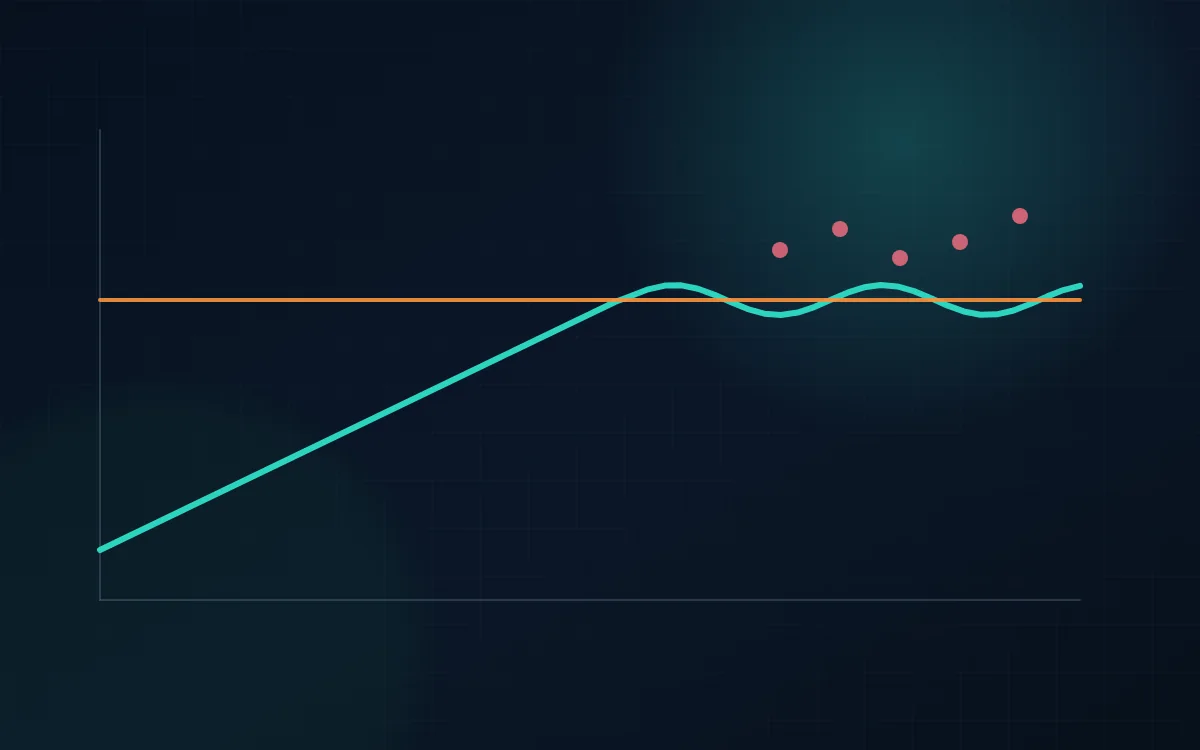
Normal clients should pass without artificial delay.
Headers, counters, and reset timing should be deterministic.
Excess traffic should fail safely without harming permitted traffic.
The exact algorithm may be fixed-window, sliding-window, token-bucket, or provider-specific. The test should verify the external contract clients actually observe.
| Stage | Example setup | Measure | Decision use |
|---|---|---|---|
| Below limit | Sustained rate below threshold | No unexpected 429s | Confirm normal traffic is unaffected |
| At boundary | Approach threshold gradually | First 429, headers/body | Verify the boundary is predictable |
| Above limit | Short controlled excess | 429 ratio, backend saturation | Confirm rejected work protects the service |
| Recovery | Reduce/stop then retry | Retry-After / window reset behavior | Verify clients can recover cleanly |
A limiter that activates too late may fail to protect the backend; one that activates too early creates unnecessary client failures. Test the policy below, at, and above the boundary, and include both sustained and burst patterns when the limiter has multiple windows or token-bucket behavior.
Use request-rate traffic when validating RPS or requests-per-window limits. Closed-loop users can obscure the boundary because achieved RPS changes when latency or throttling changes.
Many APIs allow a short burst above the long-term rate. Exercise both patterns so burst capacity, refill behavior, and sustained quotas match the intended contract.
Check that over-limit requests return the expected status, headers, and body. Clients may depend on Retry-After or quota metadata to back off correctly.
A gateway may limit by API key, tenant, IP, user, route, or globally. Use multiple approved test identities to verify one noisy client cannot consume another client’s allocation.
Reduce traffic or wait for the reset and confirm successful requests resume when expected. Sticky throttling can create a longer incident than the original burst.
The limiter succeeds only if it keeps downstream services inside a safe envelope. Pair 429 behavior with backend latency, throughput, and saturation metrics to verify the protection is effective.
Start below the documented threshold, cross it in measured increments, hold above it, then return below. This creates a clear timeline for enforcement and recovery.
Document the limit unit, window, burst allowance, scope, and expected throttle response.
Confirm normal success rate and latency with enough duration to establish a stable baseline.
Increase RPS in small increments so the first enforced stage is easy to identify.
Verify 429 rate, headers, backend protection, and client retry behavior under sustained excess demand.
Reduce demand or wait through the reset window and confirm normal service resumes predictably.
Rate limiting is part capacity protection, part fairness policy, and part API contract. Testing should verify where the limit applies, how accurately it is enforced under concurrency, what clients learn from responses, and whether the protected backend actually remains healthy when demand exceeds the admitted rate.
Document whether limits apply per API key, user, tenant, IP address, route, region, or a combination. Then build traffic that isolates each dimension. A per-tenant limiter should allow independent tenants to use their budgets without one customer's burst consuming another's allocation. A route-specific limit should not accidentally throttle unrelated endpoints if the policy says otherwise. Test just below the threshold, at the threshold, and clearly above it so off-by-one and window-boundary behavior becomes visible. For token-bucket or leaky-bucket designs, include short bursts that should fit within burst capacity as well as sustained traffic that should be shaped. Use synchronized clients to reveal race conditions in distributed counters. The test result should show admitted rate and rejected rate per identity, not just a global number, because fairness is part of correctness.
A 429 response should be fast, predictable, and useful. Check status codes, response body, retry guidance, and any standard or documented rate-limit headers. Ensure rejected requests do not consume expensive backend resources before the limiter acts; otherwise the system can still be overloaded while technically returning the right code. Measure latency for both admitted and rejected requests. Under overload, rejections should normally remain cheap rather than queueing behind saturated work. If different plans have different quotas, validate boundary behavior for each tier. For idempotent APIs, test how legitimate client retries interact with the limit. For write operations, confirm that a rejected request did not partially mutate state. Rate-limit testing is contract testing under concurrency: clients should be able to distinguish “try later” from application failure and respond without making the incident worse.
The limiter can protect the server and still cause unstable traffic if clients retry too aggressively. Simulate representative SDK or application retry behavior after 429 responses. Fixed retry delays can synchronize many clients into repeated bursts, while exponential backoff with jitter spreads attempts over time. Measure total attempt rate as well as admitted request rate so amplification is visible. If the API sends a Retry-After value or reset timestamp, verify clients can respect it and that the value matches actual limiter behavior. Check recovery when the original burst ends: queued clients should return to a normal admitted rate without a prolonged retry storm. This scenario is especially important for public APIs, webhooks, batch integrations, and mobile clients where you do not control every caller. A stable limiter shapes excess demand into predictable recovery rather than creating waves that repeatedly hit the same ceiling.
While driving traffic above the public limit, monitor the application, database, queues, and dependencies behind it. Their work rate should stay near the admitted traffic rather than the attempted traffic. If rejected requests still trigger authentication, database reads, logging, or expensive policy checks, the limiter may sit too deep in the stack to provide the intended protection. Test partial failures in the rate-limit store or distributed counter if the architecture has a defined fail-open or fail-closed policy, and make sure the choice is understood. Use the measured safe backend capacity to set quotas with margin, not at the absolute saturation point. For multi-tenant systems, combine global capacity protection with tenant-level fairness. The final result should connect policy to engineering evidence: which traffic is admitted, how excess traffic is communicated, and whether backend service objectives remain healthy while the limit is active.
Rate-limit evidence should preserve attempted, admitted, and rejected traffic together with backend work so policy correctness and actual capacity protection can be evaluated at once.
Report all three values by the dimension the policy controls—tenant, key, IP, route, or global budget. A correct limiter should keep admitted traffic near the configured policy even when attempted traffic rises sharply. This distinction also proves that the backend is protected from demand it intentionally rejects.
Measure latency and target-side work for rejected requests. If a 429 still performs authentication lookups, database reads, or expensive policy evaluation, the limiter may not provide enough protection during an incident. Cheap, early rejection should be visible as lower backend work even while client attempt volume is high.
Record Retry-After or reset guidance, client retry delay, total attempt rate, and the time required to return to normal after overload. This shows whether callers respect the contract or synchronize into repeated bursts. Recovery behavior is part of limiter quality because poorly coordinated retries can keep a protected service near saturation long after the original event ends.
Set limits far enough below measured saturation to absorb normal variance and partial failures, then verify client guidance produces stable recovery. If rejected traffic still drives expensive backend work, move protection earlier or reduce rejection cost before relying on the limiter as an incident-control mechanism.
LoadTester can drive controlled HTTP request rates and expose status-code and latency behavior as a limit activates. Use dedicated test credentials and coordinate with API owners so the experiment validates the intended policy rather than unrelated abuse defenses.
The API tutorial covers request setup, traffic models, authentication, thresholds, and result interpretation—the foundation for building a controlled rate-limit scenario.
Open the API load testing guide →The page now validates the HTTP contract around 429 and recovery rather than merely generating traffic until a limiter fires.
Reviewed by Kristian Razum, founder & principal engineer at LoadTester. Technical claims are framed as test-design guidance; no benchmark numbers are invented on this page.
Run a controlled rate below the documented limit, increase through the boundary, verify the expected throttle response above it, then return below and confirm recovery. Use the same credential scope the policy applies to.
It depends on the phase. Below the limit, unexpected 429s are failures. During an intentional over-limit phase, 429s may be the expected success condition for the limiter. Assertions should match the purpose of each stage.
Use multiple dedicated identities or API keys and distribute traffic intentionally. Verify that one identity crossing its quota does not throttle others unless a shared global limit is also part of the policy.
Yes when clients retry automatically. Validate backoff and Retry-After handling, and make sure retries do not create a self-sustaining traffic wave that keeps the client over the limit.
Cross the boundary deliberately, verify 429 behavior, and make sure the backend is actually protected.